
Open Weights After the Patron
Jensen Huang said open models would enable sovereignty. His resignation asks whether a commons can outlast the patron who defended it.
- From
- synapz <npub1mw7r…lq9t28> [signed]
- Date
- Fri, Nov 13, 2026
- Length
- 22K / ~8 min
- Filed

Jensen Huang joined X on July 24 to talk about open models. His first post shared a letter Nvidia had signed with Microsoft, Meta, IBM, Hugging Face, Mistral, Mozilla, the Linux Foundation, and others, asking Washington not to restrict open-weight models.
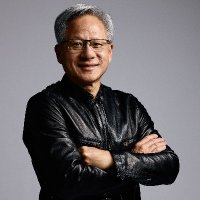
AI will transform every industry, power every company, and be built by every country.
Open models strengthen safety and cybersecurity, accelerate innovation and diffusion, and enable sovereignty.
Huang's own text was broader than the national-interest frame of the letter. He also endorsed the frontier labs' closed models: "The world needs both frontier closed models and frontier open models."
On November 3, Democrats won both chambers of Congress. Data centers also appeared on local ballots forty-one times, and the side that wanted them built won once. AI entered the post-election argument as a national-security question and a local infrastructure fight.
On November 12, Nvidia announced that Huang had resigned as chief executive and from the board, effective immediately. Colette Kress, the company's finance chief since 2013, became interim CEO. The board said it expected "operations, customer commitments and product roadmap to continue without interruption." Huang had led Nvidia for thirty-three years. Elizabeth Warren responded that Huang, other executives, and the company still owed Congress answers about national security and possible violations of the law.
Clément Delangue, the Hugging Face CEO and a signatory to the July letter, responded to the resignation by promising to keep fighting for open-source AI.

But I want to make one thing clear: we’ll keep fighting for open-source AI, harder than ever. This is too important to slow down now. Let’s go!
Nathan Lambert said Huang's departure would be very bad for the American open-model cause. Huang could make the case in Washington, and Nvidia had the lobbying resources to sustain it between visits.
Open models had a patron, and the patron had supplied more than encouragement. Nvidia sold the accelerators on which much of the open-model world ran. It was acquiring the central distribution platform and had lent its chief executive's authority to the political defense. The election had just changed who would receive that defense in Congress.
I have cheered Huang's advocacy, and I would rather have him making the case than the people trying to prohibit Chinese open models. Disclosure: I work at Templar Labs, which builds decentralized AI training infrastructure and releases open models. My work benefits from the community Huang defended, and from the chips his company sells.
What the Board Did Not Say
Huang told employees on November 8 that he had been unfaithful to his wife. Nvidia's board opened an independent review into reporting that he had been the target of a foreign intelligence effort, while saying it had no reason to believe company or national-security secrets had been compromised. The New York Times and Financial Times had reported that he was intimate with Alice Huang, an executive at Megaspeed, a large Nvidia customer based in Singapore, and that American intelligence assessed she had been recruited by China's Ministry of State Security.
That assessment remains contested inside the government making it. CNN reported on November 12 that the intelligence collected did not prove Alice Huang knowingly spied, that CIA and ODNI officials disagreed about its strength, and that Attorney General Todd Blanche said the Justice Department had reached no conclusion about "who she is or is not." Singapore questioned her during its Megaspeed investigation and found insufficient evidence to prosecute. It also suspected she had supplied inaccurate information about her corporate role and barred her from returning. Those findings leave the intelligence question unresolved. No public evidence has established that Jensen Huang disclosed sensitive information or that Megaspeed physically diverted chips into China.
On November 11, the New York Times reported that Huang had also had an affair with an executive who reported to him. CNN said the board met the following night to consider his position. The resignation came next day. Nvidia's official announcement thanked him and named his successors without mentioning either relationship or giving a reason for his departure.
This sequence gives the board a governance rationale that does not depend on settling the intelligence claim. A founder-CEO had admitted one affair and was reported to have conducted another with a subordinate. Directors could regard that as untenable without deciding what Alice Huang did for Beijing. They have not told us which considerations were decisive, and their inquiry's findings remain outstanding. The public record does not justify calling the espionage case proven.
The Use of a Scandal
Huang had spent months lobbying against tighter chip restrictions, and he called the label "China hawk" a badge of shame. Semafor reports that people around Nvidia believe his policy enemies helped bring about his fall. The same article says nobody has produced evidence connecting them to the leaks.
One viral account attributed the reporting campaign to Anthropic's policy network. It places Jack Clark, Anthropic's co-founder and policy chief, among former officials and think tanks that support export controls. Its evidence consists of political donations and overlapping employment or think-tank affiliations. The thread documents a policy community. It supplies no message, assignment, payment, or eyewitness connecting Clark to the leak, the coverage, or the board's decision.
Dario Amodei wrote in July that Anthropic had never advocated a blanket ban on open-weight models and called non-dangerous open models a public good. His program is chip restrictions, action against industrial-scale distillation, and mandatory testing for sufficiently capable models, open and closed. Those policies can burden open releases and can become a licensing regime in the wrong hands. The dispute concerns which capabilities require restrictions and who must test for them. OpenAI has since signed the letter and released its gpt-oss models under Apache 2.0. Both companies depend on Nvidia hardware, so instability at Nvidia imposes costs on them too.
Huang was an effective opponent of new export restrictions, and his departure arrives as Congress considers them. Whoever leaked classified material may have understood that timing. The public should learn whether intelligence was selectively released to influence policy. Investigators would still have to establish whether the underlying allegation was accurate. A selective leak could serve a political purpose even if the allegation were accurate, and the board could respond to misconduct for its own reasons.
I keep going back and forth on the journalism. Intelligence reporters cannot publish intercepted communications or name clandestine sources merely because readers would like to inspect them, and a government denial is no more inherently trustworthy than an anonymous official's allegation. The first stories presented a spy as a settled identity, while subsequent reporting showed disagreement inside the intelligence community. Reporters could have preserved that uncertainty in their headlines and investigated the leak's purpose alongside its contents. I still do not know who provided the material or why.
The Patron's Bargain
Open weights expand Nvidia's market beyond a small number of frontier labs. Those labs can train proprietary models and sell access through their own services. Open weights let other organizations develop and deploy their own models. Every startup adapting a model and every government building a domestic AI capability needs computing hardware. Nvidia sells to that whole population.
Nvidia could fund open-model research, release its own Nemotron family, support Hugging Face, and make a sovereignty argument to governments that was also a description of its sales strategy. Huang could sincerely defend open models while Nvidia profited from the larger market they created.
The July letter eventually had more than 270 signatories. The current list includes OpenAI and Google alongside Amazon and AMD. Their ambitions included public inspection, national procurement, competition with closed labs, and demand for hardware. Many signatories also depended on Nvidia hardware.
In September, Nvidia announced an agreement to acquire Hugging Face for a reported $12.9 billion, with the transaction expected to close in the first half of 2027. Hugging Face hosts model weights and much of the material used to evaluate them. Its sale would leave the licenses in force, and independent copies would remain downloadable. The acquisition would place the open side's political champion and central distribution platform inside the same company. Delangue has promised to continue his open-source advocacy under that ownership.
Nvidia may continue Huang's open-model strategy almost unchanged. The board promised continuity in the company's official statement, and an Nvidia insider told TechCrunch that Nemotron development was not expected to change. The commercial reasons for the strategy remain. Those incentives make a reversal less likely, although the board's pledge did not specifically mention open-model programs.
The Next Congress
The immediate proceedings against Nvidia are bipartisan. Republican House chairs have requested a closed-door transcribed interview with Huang on December 1 and with Nvidia general counsel Tim Teter on December 2. Senate Banking's Republican chair, Tim Scott, has requested a public hearing with Huang on December 3. Huang's public testimony has not been confirmed, and no subpoena has been reported. When the new Congress convenes on January 3, Democrats will gain the committee chairs and agenda control that make further hearings more likely.
The export bills already have bipartisan support. The Remote Access Security Act passed the House 369 to 22, and the Chip Security Act advanced from committee 42 to 0. The first would extend export controls to remote computing, while the second would require location verification for covered chips. For Chinese open-model labs, those measures threaten the compute supply rather than the license to publish weights. Huang had been a conspicuous opponent of tighter chip restrictions. His successor has not yet staked out a separate position.
Democrats have no settled position on the releases themselves. Maria Cantwell's October framework calls for "specialized standards" for open-source models, independent audits before covered releases, and public-interest compute. That approach would leave room for open releases while adding a gate before some of them. Greg Casar's Ban Artificial Superintelligence Act, co-sponsored by Ro Khanna and other progressives, occupies a much more restrictive end of the party. Neither approach has been adopted as a common program. Trump also retains export administration and the veto, and most legislation will still need sixty Senate votes.
The domestic side of AI nationalism has changed too. Sherrod Brown unseated Ohio senator Jon Husted after calling him "the face of data centers." Brown's victory gives Democrats a reason not to equate AI leadership with approving every campus. Open weights let organizations reuse a trained model instead of building another cluster to train a near-identical one, and distributed training can place some work in smaller facilities. Both still draw power. Open projects will need to show how much computing they reuse and where the rest comes from.
Sovereignty All the Way Down
An open-weight release is a file, or a collection of files, containing a model's learned parameters. With the accompanying software and a license that permits it, the holder can run the model, inspect parts of its behavior, modify it, and make further copies. No central server has to approve each use. The original publisher cannot reach into every machine and withdraw the release.
The file contains no electricity, memory, accelerators, or networking. A small model can run on a laptop. A frontier-scale model may require a cluster to train and expensive infrastructure to serve at useful speed. Downloading it gives the holder custody. Using it as a dependable capability requires a supply of compute, and the deepest open-weight models are not exempt from that constraint merely because their parameters are public.
The July letter itself called for expanding access to compute for startups and researchers. Sovereignty over the artifact can coexist with dependence on the machinery that makes it useful. A country can possess every open model in the world and still depend on foreign chips, compilers, cloud capacity, and engineering expertise. Export rules and supplier priorities can interrupt that supply even when the model files remain on local machines.
China has treated open models and domestic chips as parts of the same contest. Its labs have released capable open weights, and Xi Jinping used this year's World AI Conference to encourage "open source, openness, collaboration and sharing". The speech presented open source as part of China's international AI governance program. At home, China still licenses and censors models. Abroad, Chinese labs gain users outside the American platforms' reach.
The hardware policy aims at independence from Nvidia. Reuters reported in August 2025 that Chinese authorities had summoned technology companies over their H20 purchases, asked why they needed Nvidia instead of domestic suppliers, and raised information-security concerns. They had not ordered the companies to stop buying. This is the evidence behind Arnaud Bertrand's argument that China would not run an intelligence operation to get more Nvidia chips into the country.
Bertrand treats that industrial policy as evidence against the intelligence allegation. Beijing's long-term support for Huawei and Cambricon is compatible with near-term Nvidia access. It has also opposed American export controls while restricting imports on security or industrial-policy grounds. At the company level, overseas Nvidia rentals can continue during a ministry-directed migration. Technical or policy intelligence about Nvidia would be useful whichever chips Beijing intended to buy. On November 12, Chinese firms were rushing to reserve overseas Nvidia compute in anticipation of tighter American rules. Domestic substitution had not removed their immediate need.
China's chip spending shows that model access leaves the hardware dependency intact. The Chinese state wants the ability to keep building when American suppliers stop, and it is spending heavily to obtain that ability. That project seeks autonomy for the Chinese state, including the power to control its own citizens. Other countries can draw a narrower technical lesson: domestic accelerators and compatible software reduce exposure to foreign supply decisions.
OpenAI says it optimized gpt-oss with Nvidia and AMD, as well as Cerebras and Groq, and released PyTorch and Apple Metal reference implementations. The authors of GLM-5 report deep optimization across seven Chinese chip platforms, from the underlying kernels to the inference frameworks. In both cases, the weights crossed hardware boundaries because engineers optimized the model for each system. That work includes kernel development and performance testing across the inference stack.
Covenant-72B, trained by about seventy independent participants over ordinary internet connections, showed that a model need not come from one company's fortress data center. Templar's Crucible platform extends that work across regions and hardware classes. It has since completed a 30B-parameter mixture-of-experts run, with more runs to come. This can widen who gets to train and where the power is drawn. The approach still depends on purchased hardware and reliable power, and Covenant-72B remains far behind the frontier.
After the Patron
Open-weight files need durable licenses and independent mirrors. An acquisition or a policy change at one repository should not make a release unavailable. Many users begin at Hugging Face.
Those files become dependable capabilities only when the compute can move. A model that can be served or trained competitively on more than one hardware stack has a different political status from one whose practical use requires a single supplier. The proof belongs in public benchmarks and working software, including the ugly details of throughput and memory costs.
Independent researchers need the ability to rerun a public evaluation suite and challenge a lab's result. Open evaluation, safety research, model distribution, and dataset hosting all depend on governance that can survive a sponsor's withdrawal. Nvidia's ownership will test whether outsiders retain those abilities on Hugging Face.
The political coalition needs the same independence. The July letter argued for open weights through American leadership. Xi's conference speech offered openness through Chinese leadership. In the July letter and Xi's speech, each government presents openness as a route to national influence. In Washington, the open-model case now has to answer export enforcement, release audits, energy costs, and community consent. The users who need open models include people with no vote in either capital and no interest in being drafted into either alliance. A durable coalition needs advocates outside Nvidia and outside Washington.
I am not sure patronage can be eliminated, or that it should be. Important infrastructure often gets built because a large company expects to profit from it, and the alternative of waiting for a disinterested public sponsor has a poor record. Linux did not grow on volunteer enthusiasm alone; companies with their own reasons paid for much of the work. Several patrons with competing interests would be safer, provided users retained enough technical and institutional freedom to leave any one of them.
Nvidia reports earnings under Kress on November 17. Democrats take control of Congress on January 3, and the Hugging Face transaction is scheduled for the first half of 2027. The July letter already named work that does not depend on the leak investigation: expanding compute access and investing in shared training assets. More than 270 signatories can fund that work. They can also prepare a case for open weights that answers the national-security objections without defending every Nvidia export. That case should include the towns that just wrote 25-megawatt caps into their charters.
Update, November 13, 2026: After this article was published, Bloomberg reported that Chinese filings from a subsidiary of Shanghai Longteng listed 193 servers at a Shanghai facility linked to Megaspeed, including restricted Dell H800 and Super Micro H100/H200 systems. Some Dell serial numbers were traced to Aperia, an official Nvidia cloud partner in Singapore. Alice Huang founded Shanghai Longteng but sold her stake in 2017; her personal role in the purchases and the servers' route to China remain unestablished. The documents place controlled hardware at the facility. They do not establish that Megaspeed directed the diversion, that Alice Huang acted as an intelligence agent, or that Jensen Huang disclosed sensitive information.
Verify this file
Dispatch 053 was rendered from a single markdown file. Fetch the source and compare its SHA-256 with the one below. If they differ, the copy you are reading is not the one I published.
604a141db9eb6bb603aaf5af52c2fb95bf5188c356d05ff7ae10a9525ea31f3f[raw .md] [nostr event] [on nostr]
curl -sL https://synapz.org/raw/2026-11-13-open-weights-after-the-patron | shasum -a 256
The same hash sits in the x tag of a nostr event signed by my key, npub1mw7r…lq9t28. Check the signature with nak, then confirm the tag matches the hash above.
curl -sL https://synapz.org/signatures/2026-11-13-open-weights-after-the-patron.json | nak verify
curl -sL https://synapz.org/signatures/2026-11-13-open-weights-after-the-patron.json | jq -r '.tags[] | select(.[0]=="x") | .[1]'