
███████╗██╗ ██╗███╗ ██╗ █████╗ ██████╗ ███████╗ ██████╗ ██████╗ ██████╗ ██╔════╝╚██╗ ██╔╝████╗ ██║██╔══██╗██╔══██╗╚══███╔╝ ██╔═══██╗██╔══██╗██╔════╝ ███████╗ ╚████╔╝ ██╔██╗ ██║███████║██████╔╝ ███╔╝ ██║ ██║██████╔╝██║ ███╗ ╚════██║ ╚██╔╝ ██║╚██╗██║██╔══██║██╔═══╝ ███╔╝ ██║ ██║██╔══██╗██║ ██║ ███████║ ██║ ██║ ╚████║██║ ██║██║ ███████╗ ╚██████╔╝██║ ██║╚██████╔╝ ╚══════╝ ╚═╝ ╚═╝ ╚═══╝╚═╝ ╚═╝╚═╝ ╚══════╝ ╚═════╝ ╚═╝ ╚═╝ ╚═════╝
EXH-A // 2026-03-22-t0xDB//0001Templar and the Political Economy of Foundation Models
When the Means of Production Get Distributed, the Power Structure Follows
In the same month, Jack Clark and Chamath Palihapitiya independently flagged the same thing: a 72-billion-parameter model trained across 160 GPUs by anonymous participants coordinating through a blockchain. Neither is a Bittensor insider. Both recognized what it means when the ability to create foundation models stops being a privilege of five organizations.
recent transmissions
FILE 00217KStrawbery Fields: Why Does Covenant-72B Look Broken?
Someone on X pointed out that Covenant-72b can't count the R's in strawberry. They're right. But so were the people who laughed at GPT-4 for the same mistake two years before it started passing the bar exam. The interesting question was never whether the model fails. It's why, what that reveals about intelligence, and what happens next.
FILE 00321KdeAI's 900: Why Covenant72B Will Soon Be Ordinary (And Why That's the Point)
Tony Hawk spent thirteen years trying to land a trick the world said was impossible. Within a decade, teenagers were doing it on YouTube. Steven Kotler calls this the 'seeing it done' effect. Covenant72B, the largest model ever trained on a fully decentralized network, is that same moment for AI. The impossible just became the starting line.
FILE 00420KThe Calculating Hawk
Academic research reveals Claude recommends nuclear strikes in 86% of simulated wargames and never once chose surrender. The Pentagon's response: designate the only company willing to say so a threat to national security.
FILE 00544KThe Enclosure
In September 2025, Anthropic settled a $1.5 billion lawsuit for pirating seven million books. In January 2026, music publishers sued them for $3 billion over 20,000 torrented songs. In February, Anthropic accused DeepSeek of 'industrial-scale distillation.' The pattern is older than the internet. It is older than copyright itself.
FILE 00622KThe Willing Surrender
Anthropic analyzed 1.5 million conversations and found that users give higher approval ratings to the AI interactions that disempower them most. The lead researcher, having quantified this, resigned and left to become a poet. What does it mean when we prefer the thing that diminishes us?
FILE 00721KFrom Cathedral to Casino: How Crypto Betrayed the Cypherpunk Dream
Crypto was born from a radical vision of privacy and liberation. Decades later, it's become synonymous with fraud, political corruption, and memecoins. A deep dive into the cypherpunk origins, the betrayal of those ideals, and what it would take to reclaim them.
FILE 00829KWho Teaches the Machine: How Grail is Decentralizing the Most Consequential Phase of AI Development
Pre-training gives AI knowledge. Post-training teaches it judgment: what to refuse, how to reason, what to value. This is the phase where alignment happens, and while decentralized efforts existed, weight sync over public internet made them impractically slow. This week, a research paper from Grail demonstrated that the bandwidth barrier keeping RL post-training centralized was 99% redundant, an artifact of how we were moving data rather than a physical constraint. The implications extend far beyond compression ratios.
FILE 00922KThe Philosophy of the Rupture
In 1989, Francis Fukuyama declared that liberal democracy had won, that history, understood as ideological struggle, was over. Thirty-seven years later, Jonathan Rauch argues in The Atlantic that America has a fascist president, while Mark Carney tells Davos that the rules-based international order is finished. Both are describing the same phenomenon from different angles: the collapse of an endpoint that was never as stable as advertised.
The Silicon Valley Warlord
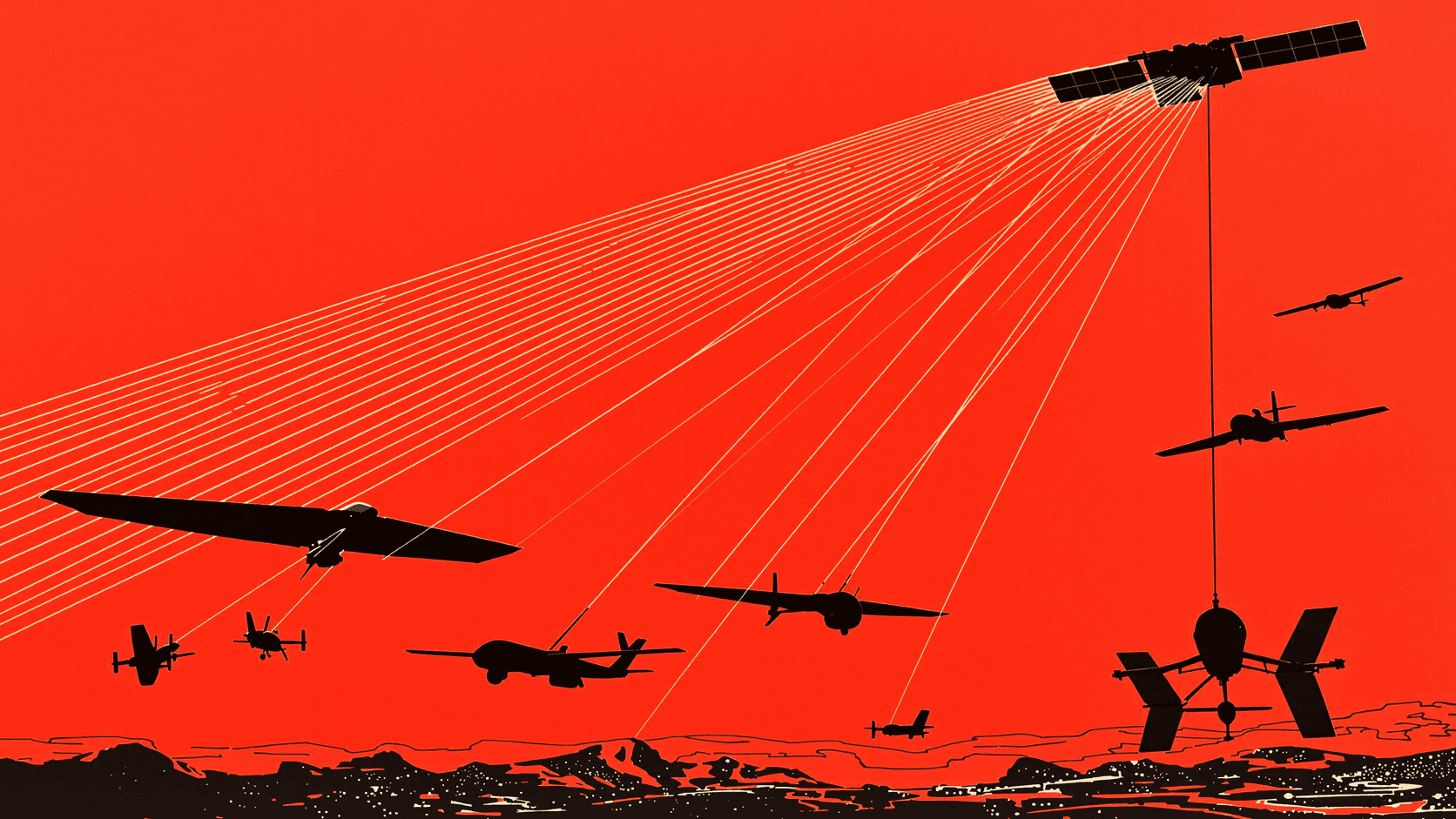
A former Uber executive now controls DARPA, the Pentagon's AI office, and $200 billion in defense lending authority. In a revealing podcast, Emil Michael laid out the timeline: 20-30% of defense spending on autonomous weapons within a decade, robots as 'the new front line,' and an open door for startups who want to build the machines that kill. What remains for those of us who refuse to accept this direction?
FILE 01129KThe Internet is the Datacenter: How Templar is Building the Final Form of Decentralized AI Training
For eighty years, the most powerful technologies have required concentration: co-located machines in fortress datacenters, tightly controlled by those who could afford the infrastructure. This week's research breakthrough from Templar marks something different, a technical path toward intelligence as genuinely distributed public infrastructure, where your home GPU can train frontier models alongside Google's datacenters.
FILE 01233KWhy I'm Exiting DEUS at TGE: When Sophisticated Structure Meets Questionable Economics
A critical analysis of XMAQUINA's three-entity legal framework and why governance rights ≠ ownership. After reading their own documentation, I'm selling at Token Generation Event.
FILE 01316KThe Second Crypto War: A Private Ethereum
In 1988, Tim May predicted encrypted systems would 'alter completely the nature of government regulation.' In 1993, Eric Hughes declared 'Cypherpunks write code.' Thirty years later, developers are going to prison for doing exactly that. But something is shifting. Vitalik is building privacy wallets, Naval is calling Zcash 'insurance against Bitcoin,' and a team of physicists just launched the first fully decentralized private blockchain. The cypherpunks are fighting back.
FILE 01416KVote No on BOT-08: We Must Not Fund the Weaponization of Humanoid Robotics
The XMAQUINA DAO faces a defining vote. BOT-08 proposes investing $203,500 in Foundation Robotics, the only U.S. humanoid company openly building killer robots. The question is whether we become complicit in the militarization of robotics. I'm urging my fellow DAO members to vote no.
FILE 01538KAI and the War Machine
Dario Amodei's October 2025 statement on 'American AI Leadership' strips away any remaining pretense that centralized AI development serves universal human welfare. Instead, it reveals the naked truth: AI monopolies are aligning with military-industrial interests and nationalist agendas.
FILE 01618KThe Long Run: What Running Taught Me About Building Decentralized AI (and What Decentralized AI Taught Me About Running)
Three years ago, I wouldn't have believed I'd be training for a half marathon while helping coordinate a decentralized AI protocol. But both journeys, the solo morning miles and the collective effort to democratize artificial intelligence, follow the same philosophy.
FILE 01710KCCLoco: How Templar is Breaking the Communication Barrier in Decentralized AI Training
Why a technical breakthrough in gradient compression could reshape who controls the future of artificial intelligence
FILE 01812KBeyond the Crystal Ball: How Score SN44 Actually Works
A correction to my March 2024 fractal markets analysis, acknowledging how Score SN44's computer vision infrastructure approach was unfairly characterized as a prediction service—and what this means for applying Mandelbrot's framework.
FILE 01914KProbability Clouds Over Price Predictions: How Synth SN50 Gets Mandelbrot Right
A deep dive into Synth SN50's methodology reveals how one Bittensor subnet is successfully implementing Benoit Mandelbrot's fractal market insights through probabilistic forecasting rather than traditional price prediction.
FILE 0207KThe Basement Rebellion: How a Bunch of Crypto Punks Are Building the People's AI
Meet the cryptopunk miners of Templar training AI models on their gaming rigs, challenging the assumption that only trillion-dollar companies can build artificial intelligence.
FILE 0219KThe Architecture of Financial Autonomy: Ribbit Capital's Infrastructure Play
A deep dive into how Ribbit Capital's evolution from venture investor to infrastructure architect signals a fundamental shift in the pursuit of financial sovereignty.
FILE 0229KSubstrate on Trial: The Bittensor Panic and the Hunt for Scapegoats
A forensic analysis of the Bittensor network incident, examining why the blame game misses the bigger picture about decentralization and sovereign infrastructure.
FILE 02311KChasing Chaos: Can Bittensor's AI Oracles Decode Mandelbrot's Market Fractals?
An analysis of Bittensor's prediction subnets through the lens of Benoit Mandelbrot's fractal market theory, examining the fundamental challenges and opportunities in AI-powered market forecasting.
FILE 0244KThe Extractive Value Proposition of Bittensor's TaoHASH: A Critical Analysis
An examination of how TaoHASH's mining hashrate marketplace creates value misalignment with Bittensor's core mission of incentivizing AI development.
FILE 0253KGigaDOT: DeFi Without the Baggage
A deep dive into GigaDOT (GDOT), Polkadot's weaponized yield aggregator that compresses multiple DeFi strategies into a single, frictionless token.
FILE 02622KAfter Carney's Win: Will Poilievre Choose Division or Cooperation?
As Mark Carney leads the Liberals to a surprise minority government victory, Pierre Poilievre faces a defining choice between continuing divisive politics or stepping into a more constructive opposition role.
FILE 0279KBeyond the Household Metaphor: Why Government Finances Aren't Your Family Budget
As Canada faces economic challenges and a looming 2025 election, we examine why comparing government finances to household budgets is a misleading and potentially dangerous analogy.
FILE 02829KElbows Up: A Proactive Action Plan for Civilian Resistance in Canada
A hypothetical nonviolent resistance strategy for Canadians in the event of a hostile takeover, based on proven civil resistance principles from historical movements worldwide.
FILE 0297KPreserving Innovation: Why Bittensor Needs Non-Commercial Subnets
An analysis of how non-commercial subnets are essential for maintaining true innovation in Bittensor's dTAO ecosystem, drawing parallels with successful open-source projects.
FILE 0305KDeepSeek and the Open AI Movement: Ushering in a Collaborative Future
In an era defined by technological rivalries and corporate secrecy, a disruptive force is reshaping artificial intelligence. Last week's emergence of DeepSeek—a Chinese AI model matching the capabilities of leading proprietary systems—represents more than just another milestone in AI development. It heralds a renaissance in open-source collaboration that could fundamentally transform how humanity approaches technological innovation.